

Designing visual and communication infrastructure for multi-state political campaigns.
Years: 2021 – 2026
Regions: Maharashtra, Odisha, West Bengal, Karnataka
Overview
Modern political campaigns operate in highly dynamic communication environments where visual clarity, speed of execution, and message consistency are critical.
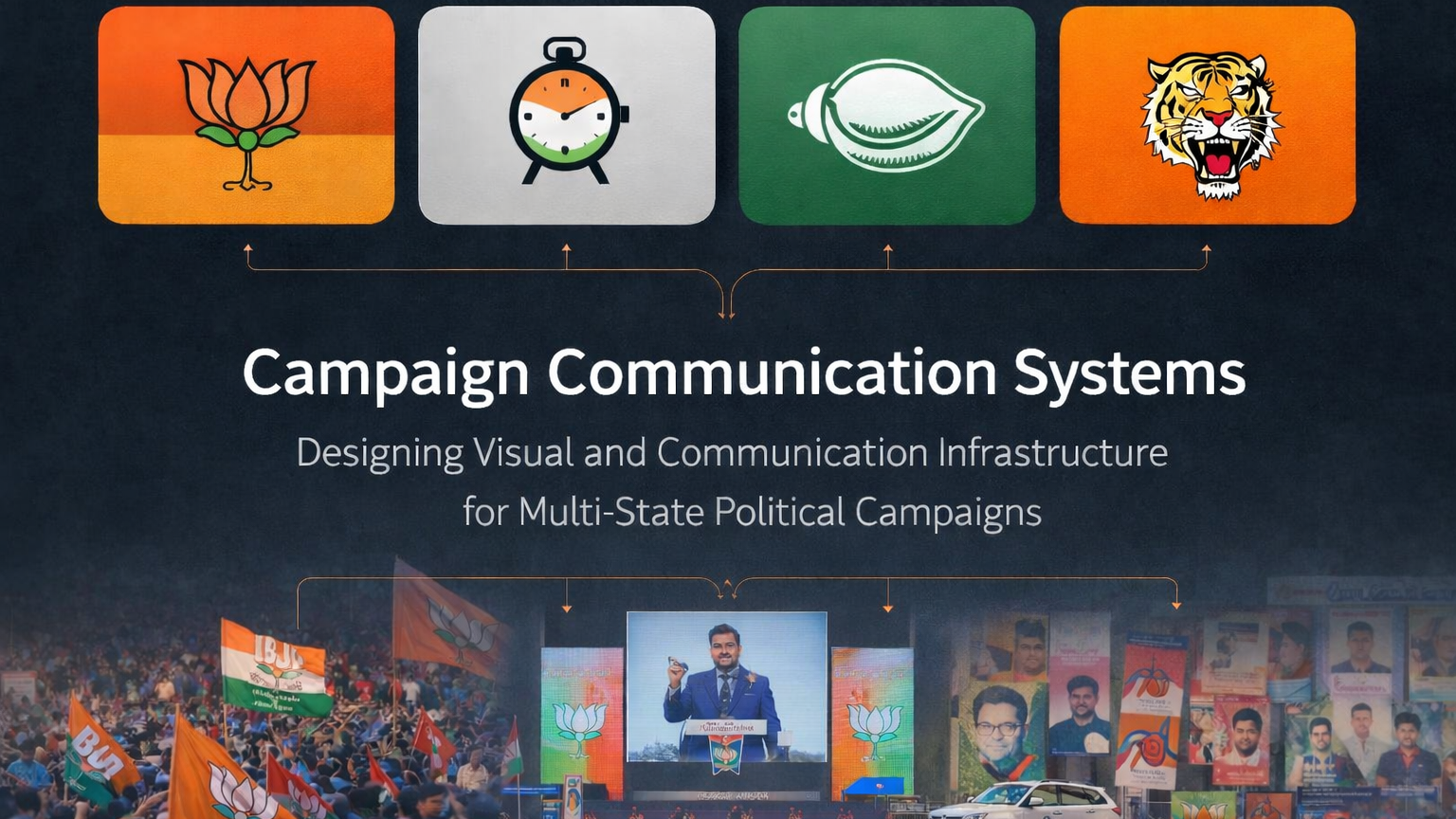
Between 2021 and 2026, I worked across multiple political campaigns in different regions of India, supporting communication infrastructure for campaigns associated with major political parties including BJP, NCP, BJD, Shiv Sena, and BJS.
These campaigns involved coordination across multiple locations, rapid content production, and communication design that needed to function effectively across rallies, media platforms, public spaces, and digital channels.
Due to the strategic nature of campaign work, specific candidate names and internal campaign details remain confidential.
Campaign Environment
Political campaigns are complex communication ecosystems.
Messages must travel simultaneously across:
• public rallies
• roadshows
• campaign offices
• media coverage
• social media platforms
• outdoor communication infrastructure
Each of these spaces requires a visual system that can maintain consistency while adapting to fast-changing campaign dynamics.
The campaigns I worked on spanned multiple states, involving dozens of campaign locations and large public gatherings, each requiring coordinated communication execution.
Strategic Objective
The objective of the communication system was to create a structure that could support:
Consistent Visual Identity
Campaign materials needed to remain visually recognizable across different regions and campaign activities.
Rapid Communication Deployment
Political messaging evolves quickly. Visual assets had to be designed and deployed within very short timelines.
Public Visibility
Campaign environments needed to support large gatherings, roadshows, and public interactions while remaining visually clear for both audiences and media coverage.
Communication Architecture
The communication system combined multiple layers of visual communication.
These included:
• outdoor campaign posters and banners
• flex boards and large-format campaign displays
• campaign vehicle branding
• stage backdrops for rallies and public meetings
• LED screen visuals for live events
• social media creatives and digital campaign content
• campaign videos, advertisements, and documentaries
• written communication including articles, blogs, and campaign narratives
The goal was to ensure that messaging remained consistent across both physical and digital campaign environments.
Execution at Scale
Across different campaigns, the communication effort involved:
• 500+ visual communication assets
• 50+ campaign locations
• multiple rallies, roadshows, and public gatherings
Each location required coordination between design teams, production vendors, and campaign leadership to ensure that materials were deployed correctly.
Because campaigns operate on tight timelines, communication assets often had to be produced and delivered within extremely short turnaround windows.
Operational Leadership
Campaign execution required managing teams of varying sizes depending on the scale of the campaign phase.
Team structures ranged from 3-person rapid response teams to production teams of more than 30 members.
Responsibilities included coordinating with:
• political leaders and campaign coordinators
• campaign strategy teams
• media and public relations teams
• printing and fabrication vendors
• photographers and videographers
• social media managers
The focus was to ensure that communication remained synchronized across teams while maintaining consistency in visual output.
Key Challenges
Political campaigns present unique operational challenges.
Information Sensitivity
Campaign communication often involves sensitive information that must be handled carefully to avoid misinterpretation or unintended public messaging.
Compressed Timelines
Campaign events and announcements frequently require visual assets within extremely short timeframes.
Multi-Location Coordination
Campaign environments span multiple cities and states, requiring coordination between teams and vendors in different locations.
Public and Media Visibility
Campaign communication must function effectively both for large audiences and for television and digital media coverage.
Creative Approach
My approach to campaign communication combines strategic thinking with execution discipline.
Key principles included:
• maintaining visual consistency across campaign locations
• structuring communication systems similar to corporate brand environments
• enabling rapid turnaround without sacrificing design clarity
• aligning visual messaging with campaign narratives
This approach allowed campaigns to maintain a structured communication presence even in highly dynamic environments.
Outcome
The campaigns supported through this communication infrastructure successfully executed rallies, roadshows, and public engagements across multiple states.
The visual systems helped maintain consistent messaging across both physical and digital platforms while supporting large-scale public engagement and media coverage.
While many campaign details remain confidential, the work demonstrates the importance of structured communication environments in modern political campaigns.