

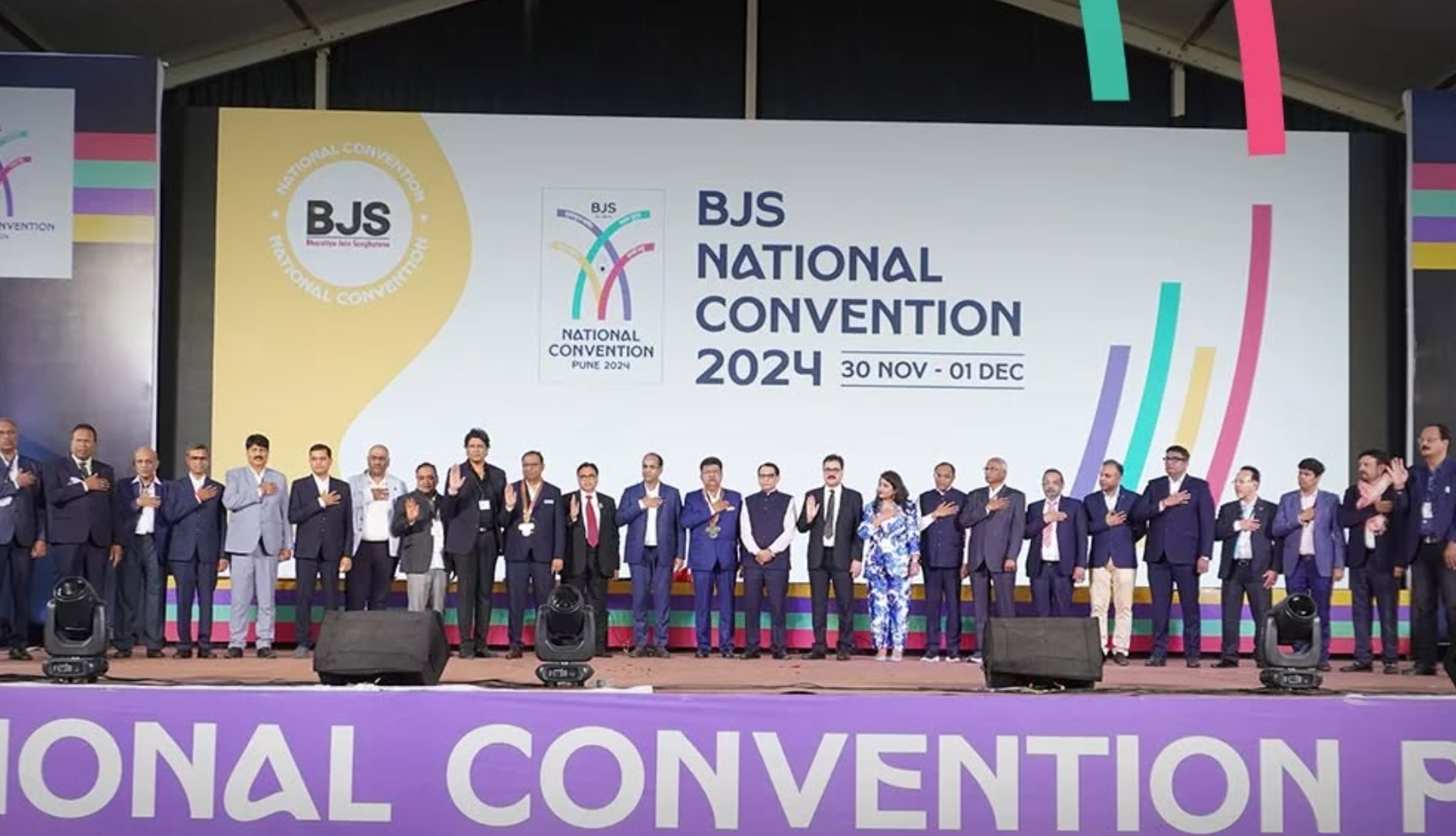
Designing a large-scale communication environment for a national institutional convention.
Location: Pune, India
Venue: Vardhaman Sanskrutik Bhawan, Bibwewadi
Year: 2024
Overview
The BJS National Convention is a biennial gathering that brings together members, leadership, and stakeholders from across the country to reflect on the organization’s initiatives, introduce new leadership, recognize achievements, and announce future direction.
The 2024 convention took place in Pune and brought together over 5000 participants, including entrepreneurs, community leaders, and more than 100 prominent business figures from across India.
The event also hosted several well-known public figures including Devendra Fadnavis, Sharad Pawar, Aamir Khan, and Murlidhar Mohol, making the convention a high-visibility platform for institutional communication.
In environments of this scale, communication extends far beyond speeches.
The physical environment itself becomes a powerful medium that shapes how the event is experienced by the audience and how it is perceived through media coverage.
This project involved designing and executing a complete communication environment for the convention.
Context
Large conventions combine multiple layers of communication simultaneously:
• live audience engagement
• stage presentations and performances
• media coverage
• photography and broadcast visibility
• digital and social media dissemination
For the BJS National Convention 2024, the environment needed to support all of these layers while maintaining a coherent identity for the organization.
The challenge was to design a communication system that could function effectively across:
• a large physical venue
• multiple speakers and sessions
• high audience density
• continuous visual storytelling throughout the event
Strategic Objectives
The communication strategy for the convention focused on three core goals.
Reinforcing Leadership Presence
The stage environment had to support the authority and visibility of multiple high-profile speakers while maintaining a strong central focal point.
Maintaining Visual Clarity in a Large Venue
With more than 5000 attendees, visual elements needed to remain readable and impactful even from long viewing distances.
Strengthening Organizational Visibility
The event needed to clearly communicate the identity, mission, and achievements of BJS across the entire venue through structured visual systems.
Communication Strategy
Instead of treating the stage as a single design element, the entire venue was approached as a communication environment.
This meant designing a coordinated system where multiple elements worked together to support the narrative of the event.
The communication system included:
• stage architecture
• LED visual storytelling
• directional signage
• informational installations
• branded environmental graphics
• entry and circulation branding
Each element was positioned to guide audience attention while reinforcing the identity of the organization.
This structured approach ensured that the environment functioned not only as a physical space but also as a platform for storytelling.
Role & Responsibilities
My role in the project combined strategic planning, creative direction, and execution leadership.
Responsibilities included:
• designing the communication environment for the venue
• stage visual design and layout planning
• event branding and environmental graphics
• development of stage backdrop and LED visual structure
• design and placement of banners, posters, and signages
• coordination of installation and vendor teams
• leading photography and videography coverage
• managing social media content and live updates
• overseeing visual documentation of the event
The goal was to ensure that both the physical experience of the event and its digital representation remained visually consistent.
Execution
Execution required coordinating multiple creative and production teams within a relatively short timeline.
The project involved the design and installation of:
• 300+ banners, posters, and signages across the venue
• branded entry arcades presenting BJS programs and initiatives
• stage backdrop and LED visual systems
• environmental branding elements throughout the venue
The visual system was designed to support the narrative of the organization while maintaining clarity for the audience.
Visual Storytelling
One of the distinctive elements of the convention was the use of visual storytelling through stage performances and motion visuals.
During the stage play presented as part of the convention program, AI-generated motion visuals were used as dynamic backgrounds to illustrate the narrative being performed.
This allowed the stage environment to actively participate in the storytelling rather than acting as a static backdrop.
Operational Leadership
The project required coordination across multiple teams, including:
• photography and videography crews
• social media managers
• content writers
• actors involved in the stage play
• sound and visual production teams
• fabrication and installation vendors
The planning and execution process spanned approximately one month, including design development, approvals, vendor coordination, site visits, and installation.
Key Visual Elements
Several elements became focal points of the communication environment.
Entry Arcades
Branded arcades at the entrance introduced visitors to the organization’s programs, goals, and leadership transitions.
Stage Environment
The stage design served as the central communication platform for speeches, announcements, and performances.
Environmental Graphics
Posters, banners, and signage throughout the venue helped reinforce the organization’s identity and guide the audience through the event.
Motion Visuals
Dynamic visuals supported the storytelling elements of the stage play and helped bring the narrative to life.
Outcome
The convention successfully hosted over 5000 participants, including national political figures, business leaders, and members of the Jain community from across the country.
The communication environment helped maintain clarity and structure across a large venue while supporting media coverage and social media dissemination.
The event achieved strong audience engagement and provided a visually coherent platform for introducing new leadership, recognizing achievements, and communicating the organization’s future direction.